25 Years of Service (2) Abortion Rights (1) Activist Groups (1) Addiction (14) ADHD (1) Administrative Data Accelerator (1) Adolescents (2) Aging (19) Agriculture (3) AI (7) AI Hub (2) Air Quality (1) Alaska (4) Alcohol (1) Alzheimer’s Disease (1) Amish (1) Annual Report (2) Anthropology (6) Anxiety (1) Arctic Research (4) Artificial Intelligence (3) Asian Families (3) Associate (1) Asthma (2) Autism (1) Award (24) Babies (2) Big Data (3) Biobehavioral Health (18) Black Families (2) Brain (4) Bullying (1) Business (1) Cancer (1) CCSA (11) Celebration (5) Census (10) Center for Education and Civil Rights (9) Center for Educational Disparities (29) Center for Global Studies (1) Center for Health Care Policy Research (1) Center for Healthy Aging (1) Center for Security Research and Education (4) Center for Social Data Analytics (2) Center for Socially Responsible Artificial Intelligence (6) Center on Education and Civil Rights (2) CERAP (1) Child Development (2) Child Health (2) Child Maltreatment (6) Child Maltreatment Solutions Network (5) Child Obesity (6) Child Study Center (2) Chronic Illness (2) Civic Engagement (2) Clearinghouse for Military Family Readiness (6) Climate Change (24) Clinical and Translational Science (6) Cognition (3) Collaborative on Population Aging Disparities (1) College of Agricultural Sciences (13) College of Communications (2) College of Earth and Mineral Sciences (1) College of Education (36) College of Health and Human Development (31) College of Information Sciences and Technology (3) College of Medicine (12) College of Nursing (1) College of the Liberal Arts (38) Communication (5) Communication Arts and Sciences (1) Community (14) Community-Engaged (8) Community-Engaged Research Action and Partnerships (1) Computational and Data Sciences (2) Computational and Spacial Analysis (2) Concussions (1) Conference (10) Consortium on Moral Decision-Making (9) COSSA (13) COVID-19 (27) Criminal Justice (6) Criminal Justice Research Center (7) Criminology (17) CSA (19) CSUA (6) CTSI (44) Data Management (10) Data Resources Hub (2) Data Sources (5) De Jong Lecture (6) Death (3) DEI (3) Democracy (3) Demography (55) Depression (4) Disasters (8) Discrimination (10) Diseases of Despair (1) Dr. Frances Keesler Graham Early Career Professorship (1) Dyslexia (1) Economics (4) Edna Bennett Pierce Prevention Research Center (1) Education (20) Education Policy (13) Educational Attainment (4) EIC (8) EIC Podcast (4) Emotion (1) Employment (5) Environment (2) Exercise (1) Expanding Empathy Speaker Series (1) Faculty Fellows (8) Faculty Information (6) Fall Gathering (2) Family (9) Family Symposium (20) Fellowship (7) Food Security (4) Forest Resources (1) Foster Care (2) Friends (3) Fullbright Scholars (2) Funding (61) Gender Equality (3) Generational Disadvantages (2) Genetics (2) Geography (6) Geology (1) Geospatial (3) Geroscience and Dementia Prevention Consortium (2) GIS (1) Global Programs (7) Global Warming (5) Government (15) Grief (2) Gun Control (2) Gun Violence (1) Health (7) Health Care (12) Health Disparities (10) Health Equity (9) Health Policy and Administration (5) Hispanic Families (3) Housing (2) Huck (2) Human Development and Family Studies (24) Human Trafficking (1) ICDS (1) IFSE Workshop (3) Immigrants (4) Immigration (32) Impact (3) Indigenous Communities (3) Inequality (2) Inequities (2) Influence (2) Information Technology (4) Innovation (2) Institute for CyberScience (8) Institutes of Energy and the Environment (3) Intentional School Failures (1) Interventions (2) IPDR (1) IRB (2) Job (3) Kinesiology (1) Kinship (3) Labor Exploitation (1) Labor Relations (6) Latino (2) Law (1) Lecture (2) Lerner Center for Public Health Promotion Brief (2) Life Course Exposures (1) Life Expectancy (4) Lloyd Prize (1) Machine Learning (1) Malnutrition (1) Marcellus Shale Natural Gas Development (1) Marijuana (1) McCourtney Institute for Democracy (9) MDI (1) Memory (2) Mental Health (5) Mexico (2) Migration Research (28) Military Families (1) National Security (1) Natural Resources (1) New Methodologies (1) NIH (30) Nominations (1) NSF (22) Nursing (1) Nutrition (1) Nutritional Sciences (1) Obesity (5) Online Aggression (1) Open Access Research (3) Open House (2) OpenMx (1) Opioids (25) OSVPR (13) Overdose (1) PAA (3) PacMAT (1) Parenting (1) Partnership (2) Penn State Cancer Institute (3) Penn State Climate Consortium (1) Penn State Research (95) Pennsylvania Population Network (6) Pennsylvania Redistricting Advisory Council (1) Philosophy (1) Playing the Archive (2) Podcast (9) POLARIS (3) Policymaking (16) Political Science (11) Politics (12) Population (2) Population Health (6) Population Research (3) Postdoctoral (4) Poverty (1) PPN Brief (2) Pregnancy (3) Prepare PA (1) Preschool (1) Prevention Research Center (4) Prevention Science (6) PRI (104) PRI Affiliate (3) PRI Associate (24) Private Services (1) Professor (1) Professorship (1) Promotion Announcement (1) Proposal (7) Protocol (1) Psychology (13) Public Health Sciences (3) Public Policy (10) Public Services (1) Qualtrics (1) QuantDev (4) Race (1) Racial and Ethnic Minorities (5) Racial Disparities (8) Racism (1) RDC (2) Recovery (1) REDCap (1) Refugees (1) Relationships (1) Research (28) Research Evidence (8) Research-to-Policy Collaboration (4) RISE Conference (1) Rock Ethics Institute (4) RPC (1) Rural Communities (13) Rural Health (9) Rural Sociology (17) School (17) School of Public Policy (2) Science Policy (1) Security (2) Seed Funding (30) Segregation (14) Self-control (2) Seminar (7) Siblings (1) SJRC Equity Fellows (1) Sleep (5) SLEIC (1) Smoking (4) Social Data Analytics (2) Social Inequity (3) Social Justice (3) Social Media (5) Social Science (65) Social Stressors (1) Sociology (52) Software (3) Special Education (12) Spring Gathering (3) SRC (1) SSRI (81) SSRI Affiliates (5) SSRI Associate Directors (1) SSRI Cofunds (33) SSRI Director (6) SSRI Staff (6) Statistics (1) Stress (4) Substance Abuse (14) Substance Use (7) Suicide (2) Support Resources (2) Survey Research Center (1) Symposium (2) Teams (1) Teens (4) Texas (1) Transportation (1) Twitter Data (5) Unemployment Rate (4) University Policy (2) Veterans (2) Violence (1) Visiting Scholar (1) Water (7) We Are (2) Why Social Science? (24) Womens Health (2) Womens Studies (1) Work Conditions (1) Workforce Development (1) Working Groups (2) Workshop (10)
Why Social Science? - Because How Would We Understand the World Without It?
This month's Why Social Science? post comes from Lisa Schamess from the American Association of Geographers (AAG) about celebrating Geography Week and how geography is essential to our daily lives. By Lisa Schamess (American Association of Geographers) When I was in elementary school, the…
Why Social Science? - Because Reimagining Science Requires Behavioral and Social Scientists at the Table, Too
By Sam Goldstein, Science for Good Nearly 40% of deaths in the United States are preventable through changes in behavior. Modifiable risk factors like smoking, poor diet, inactivity, or alcohol use are contributors to many cancers. For children and teens ages 1 to 17, the leading cause of death is…

Penn State among top universities for social science research expenditures
Michael T. Nietzel, Senior Contributor, Forbes Magazine Because many of the most pressing problems facing the nation today involve patterns of human behavior and the social forces affecting them, research in psychology and the social sciences continues to be a vital source of information about…
News Topics:
Social Science
Demography
New SSRI Working Group - Collaborative on Population Aging Disparities
Collaborative on Population Aging Disparities The Collaborative on Population Aging Disparities (CoPAD) is an SSRI-funded working group that focuses on new and growing sources of inequality among aging adults, with attention to the ways that population dynamics and life course processes interact to…

President Bendapudi visits SSRI
Recently, Penn State President Dr. Neeli Bendapudi visited SSRI to learn about our institute and the important research being conducted in the social sciences at Penn State. After a welcome from SSRI Director Deborah Ehrenthal, President Bendapudi heard highlights from SSRI core research resources…
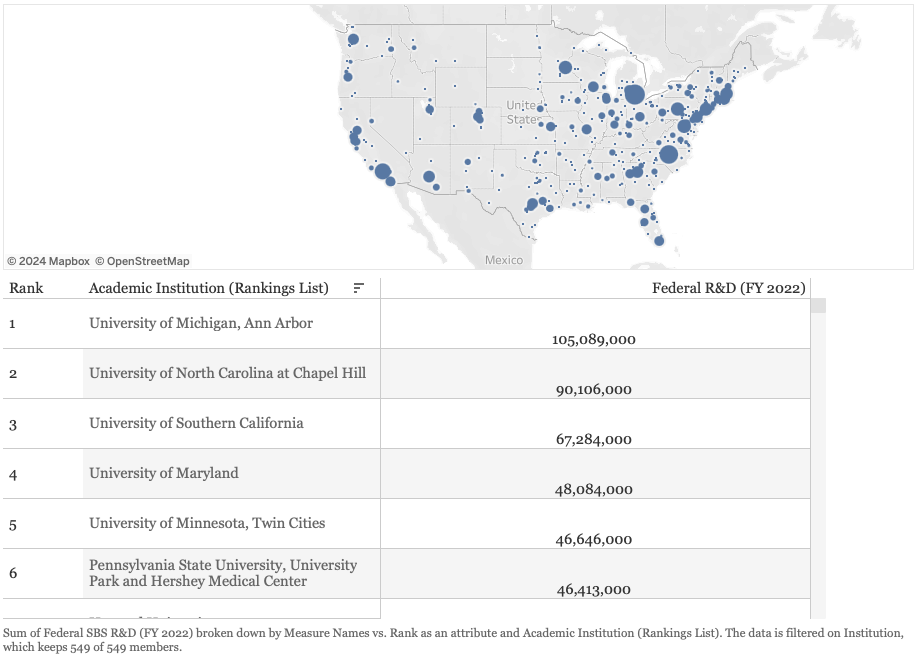
COSSA’s Social Science Rankings place Penn State at #6
COSSA recently released its annual College and University Rankings for Federal Social and Behavioral Science R&D, which highlight the top university recipients of research dollars in the social and behavioral sciences. In their rankings, Penn State came in sixth place with over $46 million…
News Topics:
COSSA
Social Science

Social science explains why K-12 integration efforts should continue
BY GENEVIEVE SIEGEL-HAWLEY AND ERICA FRANKENBERG, for The Hill The Supreme Court’s recent ruling to overturn affirmative action in higher education comes at a time when racial inequality in K-12 schools is deep and growing. The court’s decision immediately curtails what was an already limited…

Firearm injuries undermine mental, physical, and financial health
By Keren Landman for Vox In his speech last Thursday about the Robb Elementary School massacre in Uvalde, Texas, President Joe Biden spoke about a young student who’d averted the shooter’s attention by smearing her classmate’s blood on her face. “Imagine what it would be like for her to walk down…

Community-Engaged Researcher Survey
Penn State faculty are invited to participate in a survey as part of a collaborative Social Science Research Institute (SSRI) and Penn State Clinical and Translational Science Institute (CTSI) initiative to strengthen existing and foster new community-academic partnerships in community-engaged…
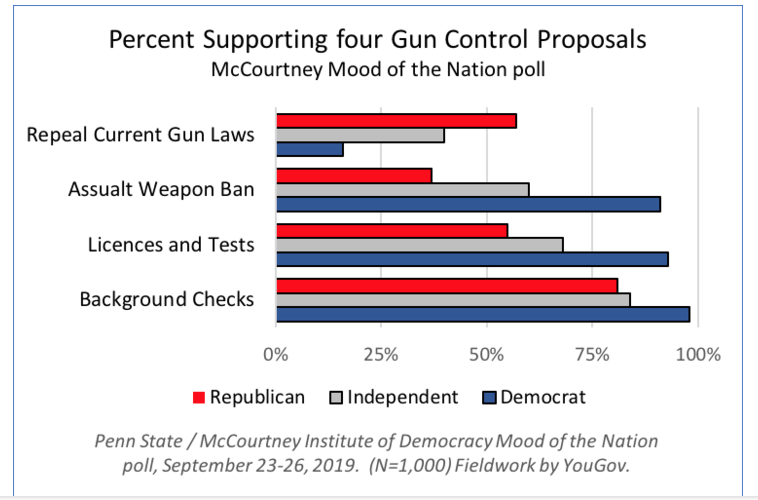
Mood of the Nation Poll examines gun control as case reaches Supreme Court
The Supreme Court’s decision on a New York City gun regulation could mean the first significant judicial action on gun reform in nearly a decade — at a time when the McCourtney Institute for Democracy’s Mood of the Nation Poll finds that a majority of Americans support stricter regulations for gun…

Progressive gender views may protect health of financially dependent men
As it becomes more common for women to be the breadwinner of their family, men’s health may be affected depending on their views on gender ideology, according to Penn State researchers. The researchers found that men who were financially dependent on their wives and who also had more traditional…
NIH Requests Public Comment on a Draft Policy for Data Management and Sharing and Supplemental Draft Guidance
NIH recently released a Draft NIH Policy for Data Management and Sharing and supplemental draft guidance for public comment. The purpose of this draft policy and supplemental draft guidance is to promote effective and efficient data management and sharing that furthers NIH’s commitment to…

Why Social Science? - Because It Tells Us How to Create More Engaged Citizens
By Adam Seth Levine, PhD, Associate Professor of Government, Cornell University; President, research4impact Engaged citizens are not born. They are made. Leaders of voluntary civic associations play a critical role in this process. They offer people opportunities to exercise their voice on issues…

Evidence lights the way
By Adam Gamoran, Science Magazine These are dark times for science and public policy in the United States. In June, it was revealed that the White House suppressed the congressional testimony of a State Department scientist on the implications of climate change for national security—just the latest…
Why Social Science? - Because Social Science Is a Form of Service that Improves Quality of Life for People Around the World
By Arthur Lupia, PhD, Assistant Director for Social, Behavioral & Economic Sciences, National Science Foundation If you are reading these words, chances are you are a social scientist or someone who cares about social science. Either way, I am grateful to you and everyone who devotes…
NIH to begin requiring ORCID ID for many awards
The NIH, as well as several academic journals across disciplines, are now requiring (or soon will be) the use of an ORCID ID when submitting certain proposals or papers. The benefits to the worldwide research community are many - identification by the non-profit organization, ORCID, helps…
Are you a translational scientist?
By George A. Mashour, M.D., Ph.D., Editor-in-Chief, Journal of Clinical and Translational Science (JCTS) Recently, an international group of investigators who are part of the Translation Together consortium defined the ideal characteristics of a translational scientist. Recall that translational…
News Topics:
Clinical and Translational Science
Social Science
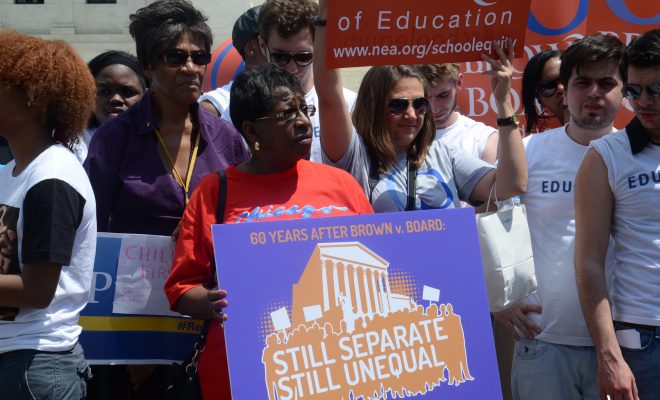
What school segregation looks like in the US today, in 4 charts
By Erica Frankenburg, for The Conversation Democratic presidential candidate Kamala Harris, a senator from California, has spoken about how she benefited from attending Berkeley’s desegregated schools. “There was a little girl in California who was part of the second class to integrate her public…
Penn State to host first international conference on Project Drawdown research
Penn State, in partnership with Project Drawdown, will hold the first international conference on climate solutions, based on the 2017 New York Times best-seller “Drawdown, The Most Comprehensive Plan Ever Proposed to Reverse Global Warming.” The conference, titled “Research to Action: The Science…

Film on Puerto Rico, energy policy to premiere at Penn State
“DisemPOWERed: Puerto Rico's Perfect Storm,” a film that examines the reasons why Hurricane Maria devastated Puerto Rico in 2017, will premiere at Penn State. The screening will occur at 6:30 p.m. Tuesday, July 23, in Foster Auditorium in Pattee Library. Following the screening there will be a…
Penn State hosts second annual Summer Institute on Migration Research Methods
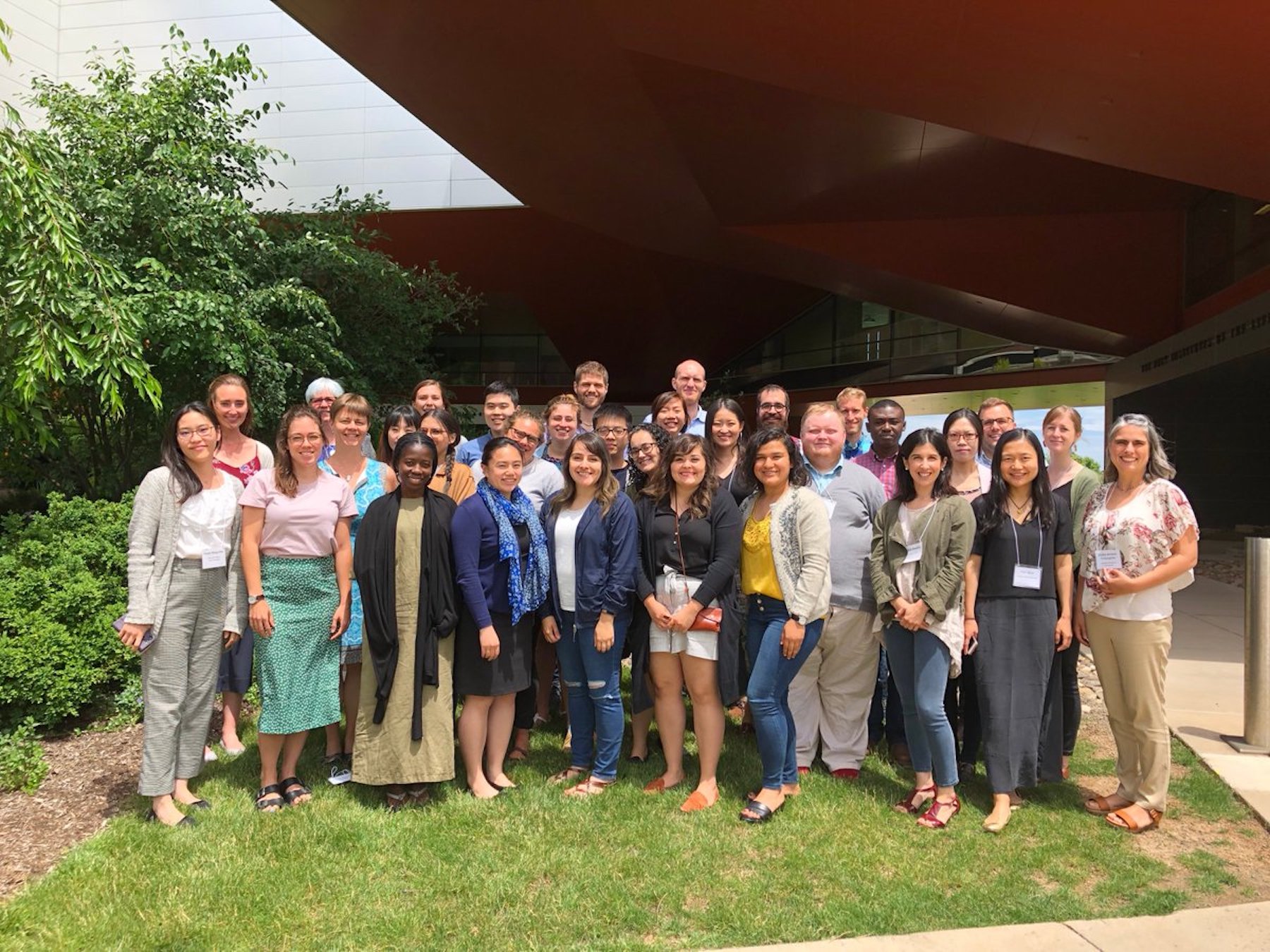
Successful research methods regarding immigration and migrant populations was the focus of the 2019 Summer Institute on Migration Research Methods, held recently at Penn State’s University Park campus. Jennifer Van Hook, Roy C. Buck Professor of Sociology and Demography and a Social Science…
Community-Engaged Research Day fosters collaborative partnerships
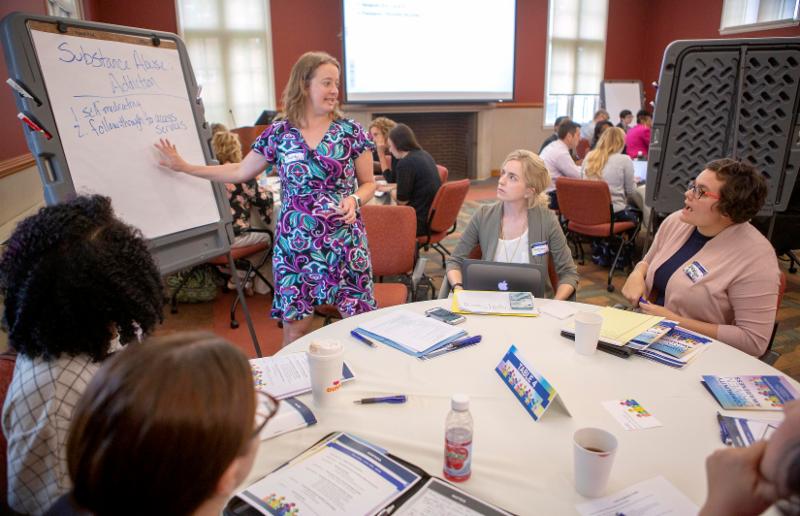
Community leaders and scientists shared breakfast and sought solutions to problems like opioids, obesity and depression June 6 at the Community-Engaged Research Day. The Community-Engaged Research Core of Penn State Clinical and Translational Science Institute hosted the event at Dixon University…

Why Social Science? - Because It Can Improve the Lives of Those Who Serve Our Country
By Leanne K. Knobloch, Ph.D., Professor, Department of Communication, University of Illinois & Steven R. Wilson, Ph.D., Professor, Department of Communication, University of South Florida Throughout our nation’s history, members of the U.S. military have served our country with honor, courage,…

Penn State’s social sciences top NSF Rankings
The social sciences at Penn State was ranked tenth out of over 900 institutions by the National Science Foundation (NSF) in their NSF Total Research Expenditure Rankings for Fiscal Year 2017. The rankings are based on the total dollars in federal research and development expenditures of each…
Penn State podcast series covering issues impacting democracy
Penn State podcast series covering issues impacting democracy Penn State’s The McCourtney Institute for Democracy has crafted an intellectual podcast series, Democracy Works, to highlight issues in American democracy. Instead of bipartisan debate, the series addresses problems from a broader…