National Symposium on Family Issues
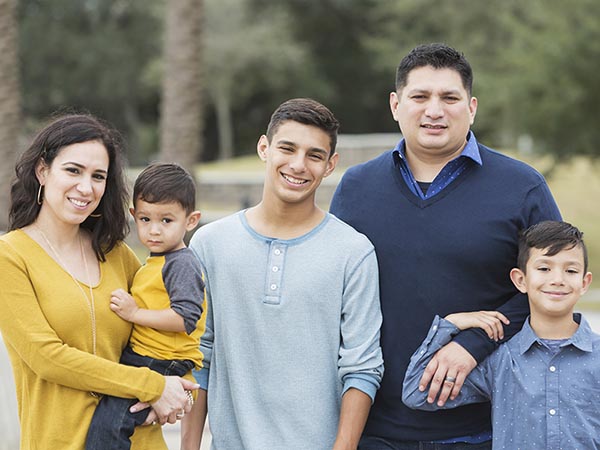
For 31 years, the Family Symposium has focused on topics that appeal to and are presented by scholars from multiple disciplines who study family issues. Scholars in family research convened to present and critique research on the focal topic, consider future directions for research, and discuss how programs and public policy can effectively improve the state of families. The 2023 Family Symposium was the last event in this series.
Each year, Penn State’s Population Research Institute and Social Science Research Institute, along with departments and centers in the College of Liberal Arts and the College of Health & Human Development, hold a two-day symposium focused on a key issue facing families. Each fall, about 200 scholars and policy experts attend what is now known as the National Symposium on Family Issues to consider a theme of multidisciplinary interest.
The Family Symposium is designed to focus on topics that appeal to (and are presented by) scholars from multiple disciplines who study family issues. Nine of the top scholars in the field of family research convene to present and critique research on the focal topic, consider future directions for research, and discuss how programs and public policy can effectively improve the state of families. The event gathers distinguished researchers, young scholars, and students in diverse fields such as family studies, child development, sociology, psychology, education, economics, anthropology, and policy studies, as well as health and human service providers and policy makers.
Past symposia have focused on issues such as: emerging methods in family research, African American families, diverging destinies of families in an era of increasing inequality, transitions to adulthood, and Hispanic children in immigrant families.
Attendees include Penn State students, faculty, and alumni; students and faculty from other institutions; community, state, and national policy makers; program staff; and social service administrators. The symposium is co-funded annually by the Eunice Kennedy Shriver National Institute of Child Health and Human Development and a number of Penn State departments and centers, including the Population Research Institute and the Social Science Research Institute.
Students are exposed to some of the most important issues in family science and become better scholars and practitioners by learning about the dimensions and complexity of problems facing families. Each symposium includes a reception designed to encourage students to network with world-renowned family scholars. Graduate students are also invited to attend a luncheon with their choice of presenters.
The 2023 symposium was organized by Jennifer Van Hook, Director of the Population Research Institute, and Valarie King, Emeritus Professor of Sociology, Demography, and Human Development.
NSFI Book Series
Books based on each symposium bring the event to an even wider audience. The volumes have received favorable reviews and are used as reference works by faculty, students, and practitioners. The symposium is a landmark event each year in the ongoing study of families. It reaches a wide audience and affects the national conversation on a very important topic. View previous symposia and books.
De Jong Lecture in Social Demography

This annual event features presentations and discussions with prominent scholars on topics in social demography. It is supported by the Gordon F. and Caroline M. De Jong Lectureship in Social Demography Endowment.
The De Jong Lecture is supported by the Caroline M. and Gordon F. DeJong Lectureship in Social Demography Endowment. It is administered jointly by the Department of Sociology and the Population Research Institute.
Gordon F. De Jong is a Distinguished Professor Emeritus of Sociology and Demography and Senior Scientist with Penn State’s Population Research Institute.
Caroline M. De Jong is a former middle school teacher and has been involved in numerous community, church, and university-related organizations, including the American Association of University Women, Stay-and-Play Nursery School, Presbyterian Women, and the Center County Board of Elections.
Population Science Seminar Series
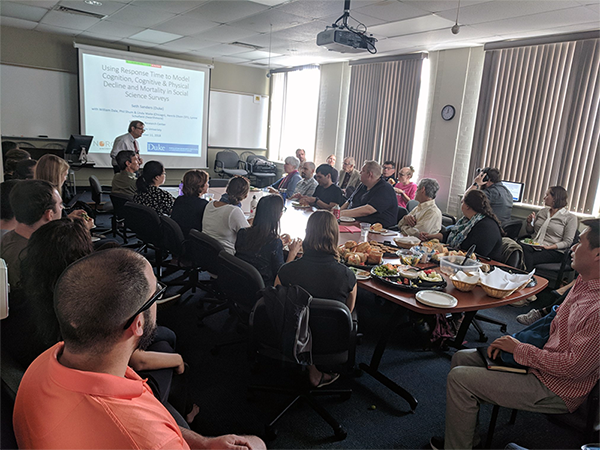
Our popular Population Science Seminar Series provides a regular forum for PRI faculty, postdoctoral fellows, and graduate students to exchange ideas. If you are unable to physically attend a Population Science Seminar Series you are interested in, we also stream and record them.
Wanting Children
Family-Planning Policies and the Engineering of America’s PopulationDate: Sep 22, 2026
Presented by: Dr. Leonard Lopoo
Why So Few Latinos Find Labor Market Success
Date: Sep 15, 2026
Presented by: Dr. Nicole Kreisberg
Benefit or Burden?
How State Policy Decisions Shape Child Care Subsidy Participation and Maternal Employment, 2010-2022.Date: Apr 14, 2026
Presented by: Dr. Margot Jackson
The childhood cost of mid-life mortality
Parental death in the United StatesDate: Mar 24, 2026
Presented by: Dr. Emily Smith-Greenaway
When the Future is Uncertain
Fertility Intentions in CrisisDate: Mar 03, 2026
Presented by: Dr. Linnea Zimmerman
Intersectional Life Course Dynamics and Black Women's Health
Date: Feb 10, 2026
Presented by: Dr. Christy Erving
How well do the Indian government’s caste categories capture social and health inequalities across its 4000+ communities?
Date: Feb 03, 2026
Presented by: Dr. Daniel Hruschka
An Epidemiologic Perspective on Oil and Gas Development
Date: Nov 11, 2025
Presented by: Dr. Mary Willis
Charting the Future of Brain Health in Texas
Integrating the Social and Environmental ExposomeDate: Oct 21, 2025
Presented by: Dr. Chelsea Liu
Masculinity in Education
A New Look at an Old QuestionDate: Sep 30, 2025
Presented by: Dr. Joel Mittleman
Why Have Mortality Rates Become Increasingly Unequal Across U.S. Counties?
Date: Sep 23, 2025
Presented by: Dr. Jennifer Karas Montez
Leveraging Big Health Data to Answer Questions about Program and Policy Effects
Date: Sep 16, 2025
Presented by: Dr. Jennifer Ahern
Measuring Climate Vulnerability Using Big Population Data
Date: Apr 22, 2025
Presented by: Dr. Clark Gray
Immigration and American Life Expectancy
Date: Apr 15, 2025
Presented by: Dr. Arun Hendi
Broadband Internet Access, Economic Growth, and Wellbeing
Date: Mar 04, 2025
Presented by: Dr. Claudia Persico
Remembrance of Things Past?
Measuring Life Course Exposures RetrospectivelyDate: Feb 25, 2025
Presented by: Dr. Sarah Burgard
Older Adults' Complex Family Lives in the 21st Century
Implications for End-of-Life Preparations and Well-BeingDate: Feb 18, 2025
Presented by: Dr. Debby Carr
Child Labor Statistics using MICS
Work & Hazardous Work Estimates for 46 Low and Middle Income CountriesDate: Feb 11, 2025
Presented by: Dr. Deborah Levison
Multilevel Intersectional Stigma & Empowerment
Decreasing Tobacco Use among Black and Latine Adult Sexual and Gender MinoritiesDate: Nov 05, 2024
Presented by: Dr. Kasim Ortiz
Buffering Wealth Decline?
How Child Proximity Mitigates the Financial Impact of Dementia in Older AdultsDate: Oct 29, 2024
Presented by: Dr. Adriana Reyes
The "Double Jeopardy" of Midlife and Old Age
Mortality Trends in the United StatesDate: Oct 22, 2024
Presented by: Dr. Leah Abrams
Historical Violent Terror and Contemporary Pregnancy Outcomes
Date: Oct 08, 2024
Presented by: Dr. Amy Bailey
Remote Work in Flux
Inequities in Mismatches Between Preferences and Place and Subsequent Strategic AdaptationsDate: Oct 01, 2024
Presented by: Dr. Wen Fan
Soldiers and Kings
Survival and Hope in the World of Human SmugglingDate: Sep 17, 2024
Presented by: Dr. Jason De Leon
Precarious Protections
Unaccompanied Minors Seeking Asylum in the USDate: Apr 23, 2024
Presented by: Dr. Chiara Galli
The All-or-Nothing Marriage?
Marital Functioning from 1980 to 2023 in the United StatesDate: Mar 12, 2024
Presented by: Dr. Claire Kamp Dush
Manifestations of Structural Racism Across the Life Course
Approaches and Implications for Health and AgingDate: Feb 20, 2024
Presented by: Dr. Taylor Hargrove
Empty Chairs at the Dinner Table
Racial Disparities in Exposure to Household Member DeathsDate: Feb 06, 2024
Presented by: Dr. Angela Dixon
Role of Personal Social Networks Among Latinos
Implications for Type 2 Diabetes outcomes and Self-Care BehaviorsDate: Jan 30, 2024
Presented by: Dr. Karen Florez
The Demography of Unrealized Fertility
Conceptual and Operational Challenges and the Agenda AheadDate: Nov 14, 2023
Presented by: Dr. Sara Yeatman
The Physical Cost of Moving Up
U.S. Immigrants' Earnings Mobility and Later-Life HealthDate: Nov 07, 2023
Presented by: Dr. Leafia Ye
Exploring how Genetic ancestry tests affect racial appraisals and classifications
Date: Oct 17, 2023
Presented by: Dr. Marissa Thompson
Novel US Nationwide Estimates of Regulated Public Water Contaminants at Various Spatial and Temporal Resolutions for Epidemiologic Study
Date: Oct 10, 2023
Presented by: Dr. Anne Nigra
Past and Present Parasite Infections in the United States
Date: Sep 12, 2023
Presented by: Dr. Theresa Gildner
Community Supervision and Health Among Latina Women
Understanding Gendered and Racialized PatternsDate: Apr 25, 2023
Presented by: Dr. Carmen Gutierrez
Race, Ethnicity, and Romantic Unions in the "Racial Middle"
The Immigrant Second Generation from Adolescence to Middle AdulthoodDate: Mar 14, 2023
Presented by: Dr. Cynthia Feliciano
The Geography of Income Polarization and Its Intergenerational Consequences
Date: Feb 07, 2023
Presented by: Dr. Siwei Cheng
Born on the Wrong Side of the Tracks
Exploring the Causal Effects of Segregation on Infant HealthDate: Jan 24, 2023
Presented by: Dr. Tiffany L. Green
Structuring Choice
School Segregation at the Intersection of Policy and PreferencesDate: Dec 06, 2022
Presented by: Dr. Thurston Domina
Health and Place
Why, what, and how?Date: Nov 15, 2022
Presented by: Dr. Debarchana Ghosh
Chronic Pain
Sociological and demographic fundamentalsDate: Nov 08, 2022
Presented by: Dr. Anna Zajacova
Water, Food, and the Triple Burden of Disease in the Galapagos, Ecuador
Date: Oct 11, 2022
Presented by: Dr. Amanda Thompson
Just Get on the Pill
The Uneven Burden of Reproductive PoliticsDate: Sep 27, 2022
Presented by: Dr. Krystale Littlejohn
Design and Implementation of an Online Weekly Survey of "Refugee" Incorporation and Health in Costa Rica
Date: Sep 13, 2022
Presented by: Dr. Abigail Weitzman
Social Housing, Neighbourhood Dynamics, and Residential Outcomes
Lessons from the U.S. and CanadaDate: Apr 19, 2022
Presented by: Dr. Prentiss Dantzler
Activity Spaces, Community Resources, and Health
Introducing the Boston Activity Space and Health Study (BASHS)Date: Mar 29, 2022
Presented by: Dr. Greg Sharp
Critical Theoretical Perspectives on Race, Class, and Gender Inequities during the Covid-19 Pandemic
Date: Mar 01, 2022
Presented by: Dr. Whitney Pirtle
Centering Equity in Health Research
Date: Feb 15, 2022
Presented by: Dr. Elaine Hernandez
Love in Lockdown
Couple's Shared Time During the Covid-19 Pandemic in the United StatesDate: Jan 18, 2022
Presented by: Dr. Katie Genadek
Reducing Response Bias in Reports of Trauma and PTSD
An Application of the Non-verbal Response Card in a Survey of Youth in Burkina FasoDate: Dec 07, 2021
Presented by: Dr. David Lindstrom
Postdocs and Graduate Students Flash Talks
Date: Nov 16, 2021
Presented by: Deshamithra Jayasekera, Muntasir Masum, Liyun Liu, Kayla Kemp, Mara Sheftel
Development and Implementation of a Climate-Health Early Warning System for Malaria
Date: Nov 09, 2021
Presented by: Dr. William Pan
The PSU Population Research Institute & Syracuse University CPR/Lerner Center Joint Symposium
Date: Oct 12, 2021
Presented by: Marc Garcia, Shannon Monnat, Selena Ortiz, Alexis Santos
African American Women's Community Activism
A Feminist Reconceptualization As Unpaid Collective WorkDate: Sep 28, 2021
Presented by: Dr. Nina Banks
Uncovering College Effect Heterogeneity using Machine Learning
Date: Sep 14, 2021
Presented by: Dr. Jennie E. Brand
Education in the context of demographic decline
The case of China’s rural school closure initiativeDate: Mar 23, 2021
Presented by: Dr. Emily Hannum
Complexity and Constraint
College Attitudes and Expectations among Teens of the Prison BoomDate: Mar 16, 2021
Presented by: Dr. Anna Haskins
Profiles of Mothering in West Africa
Date: Mar 02, 2021
Presented by: Dr. Sangeetha Madhavan
The Integration Challenges of African Immigrants
Findings from an Ethnographic Study of Liberians in PittsburghDate: Feb 16, 2021
Presented by: Dr. Yolanda Covington-Ward
The PSU Population Research Institute & Syracuse University CPR/Lerner Center Joint Symposium
Population Health, Children and Family PolicyDate: Jan 26, 2021
Presented by: Shannon Monnat, Leonard Lopoo, Christian Connell, Amy Schwartz, Andrew Fenelon, Erica Frankenberg, Colleen Heflin, Léa Pessin, Sarah Damaske
PRI Graduate Students Flash Talks
Date: Nov 10, 2020
Presented by: Matt Brooks, Marco Faytong-Haro, Joeun Kim, Jane Lankes, Saman Naz
Link-tracing designs for the study of migration
Results from the Chinese Immigrants in the Raleigh-Durham Area (ChIRDU) StudyDate: Oct 13, 2020
Presented by: Dr. Giovanna Merli
The Place-Based Turn in Federal Policy
Implications for Urban Demography & InequalityDate: Sep 29, 2020
Presented by: Dr. Laura Tach
Have Changing Family Demographics Narrowed the Gender Wage Gap?
Date: Sep 15, 2020
Presented by: Dr. Alexandra Killewald
Wealth Inequality in Young Adulthood
Defining the Black Middle ClassDate: Feb 11, 2020
Presented by: Dr. Fenaba Addo
An Gene-Environment Study of the Unhealthy Assimilation Hypothesis of Obesity in US Hispanic/Latinos
Date: Jan 28, 2020
Presented by: Dr. Lindsay Fernandez-Rhodes
Population, Health & Environment Flash Talks
Date: Jan 21, 2020
Presented by: Yubraj Acharya, Guangqing Chi, Heather Randell, Asher Rosinger, and Alexis Santos
The Social Context of Influence, Coercion, and Control
Intimate Relationships and Reproductive BehaviorsDate: Dec 03, 2019
Presented by: Dr. Jennifer Barber
Gender Minority Parents
Family Creation, Child Outcomes, & Couple DynamicsDate: Nov 12, 2019
Presented by: Dr. Samantha Tornello
A Demographer's Perspective on Longterm Social Change: 1972-2018
Date: Oct 29, 2019
Presented by: Dr. Michael Hout
Age at immigration, generational status, and death among children of immigrant mothers
A longitudinal analysis of siblingsDate: Oct 08, 2019
Presented by: Dr. Neil K. Mehta
Connecting the Dots
Using social network analysis to untangle the factors driving international migrationDate: Sep 24, 2019
Presented by: Cassandra McMillan
Childbearing and women's mid-life well-being in a low-income, high-fertility context
Date: Sep 10, 2019
Presented by: Dr. Sarah Hayford
Time to Mainstream Environment into Migration Theory?
Date: Apr 23, 2019
Presented by: Dr. Lori Hunter
Labor shortage or labor strife?
Worker perspectives on the labor supply problem on Pennsylvania mushroom farmsDate: Apr 02, 2019
Presented by: Dr. Kathleen Sexsmith
Long-Term Decline in Intergenerational Mobility in the U.S. Since 1850
Date: Mar 19, 2019
Presented by: Dr. Xi Song
Is there a Global Second Demographic Transition?
World Trends and Education, Health, and Economic Correlates from 1960-2010.Date: Feb 26, 2019
Presented by: Dr. David Baker, Dr. Ashton Verdery, Erik Hernandez, Anne Morse, Hyerim Kim
Exposure to Violence and Malnutrition of Children in Iraq
Date: Jan 29, 2019
Presented by: Dr. Yubraj Acharya
Data Collection as Disruption
Insights from a Longitudinal Study of Young AdulthoodDate: Nov 06, 2018
Presented by: Dr. Jennifer Trinitapoli
Networks, Diffusion and Inequality
Date: Oct 16, 2018
Presented by: Dr. Filiz Garip
Does the Transition to Grandparenthood Deter Gray Divorce?
A Test of the Braking HypothesisDate: Oct 09, 2018
Presented by: Dr. Susan Brown
Young Women's Unrealized Educational Expectations and Mental Health
Evidence from MalawiDate: Sep 25, 2018
Presented by: Dr. Emily Smith Greenaway
Using Response Time to Model Cognition, Cognitive & Physical Decline and Mortality in Social Science Surveys
Date: Sep 11, 2018
Presented by: Dr. Seth Sanders
Beyond Discrimination: Why Vigilance Matters for Population Health
Date: Apr 17, 2018
Presented by: Dr. Hedwig Lee
Economic Volatility and Family Building Behaviors during the Transition to Adulthood
Date: Apr 03, 2018
Presented by: Dr. Shannon Cavanagh
Liminal Legality and Education
Evidence from Salvadoran Child MigrantsDate: Mar 27, 2018
Presented by: Dr. Matthew Hall
Demographic and Health Impacts of Climate Change in Sub-Saharan Africa
Date: Mar 13, 2018
Presented by: Dr. Brian Theide
Data Security at Penn State
Date: Feb 27, 2018
Presented by: Donald Welch
The PSU Administrative Data Accelerator
Date: Feb 13, 2018
Presented by: Dr. Daniel Max Crowley
Finding a Living Kidney Donor
Preliminary EvidenceDate: Jan 30, 2018
Presented by: Dr. Jonathan Daw
Adverse Childhood Experiences, Early and Nonmarital Fertility, and Women’s Health at Midlife
Date: Jan 09, 2018
Presented by: Dr. Kristi Williams
Where college graduates move
Human capital, locational attractivity, and interstate migration in the USDate: Dec 05, 2017
Presented by: Dr. Richard A. Wright
The “Choices” that Individuals Make
Demography's Perspectives on Stratified Reproduction, Gender, and Choice in our Neoliberal WorldDate: Oct 19, 2017
Presented by: Dr. Nancy Riley
Diverse Origins, Disparate Outcomes
The New Landscape of Black AmericaDate: Oct 17, 2017
Presented by: Dr. Tod G. Hamilton
A Real Disaster
How Rising Costs of Natural Hazards Are Increasing Social Inequality in AmericaDate: Oct 10, 2017
Presented by: Dr. James Elliott
Cohabitation Nation: Race, Class, and the Remaking of Relationships
Date: Sep 26, 2017
Presented by: Dr. Sharon Sassler
Dissolution, Conflict and Australian Children's Developmental Outcomes
Date: Sep 19, 2017
Presented by: Dr. David Ribar
Using mixed-methods to examine public beliefs about the link between housing affordability and health
Results from a national surveyDate: Sep 12, 2017
Presented by: Dr. Selena Ortiz
The Great Recession and Racial Disparities in Access to Mortgage Credit
Date: Apr 18, 2017
Presented by: Dr. Chenoa Flippen
Life course employment patterns among Black, Hispanic, and White Women
Date: Apr 04, 2017
Presented by: Dr. Léa Pessin
Genetic Endowments, Educational Attainment, and Social Mobility
Date: Mar 28, 2017
Presented by: Dr. Jason Fletcher
Deporting the American Dream
Date: Mar 21, 2017
Presented by: Dr. Jacob Rugh
Where 'Old Heads' Prevail
Age and Inmate Status in Men's Prison UnitDate: Feb 07, 2017
Presented by: Dr. Derek Kreager
Car Crashes, Drug Overdoses, Suicides, & MURDERS
Predictors of Early Death in High School & BeyondDate: Jan 24, 2017
Presented by: Dr. Rob Warren
The Causal Effects of Advanced Mathematics Placement
Date: Nov 01, 2016
Presented by: Dr. Andrew Penner
Demography in the Big Data Revolution
Date: Oct 18, 2016
Presented by: Dr. Stephanie Bohon
Population Dynamics After a Natural Disaster
Date: Apr 26, 2016
Presented by: Dr. Elizabeth Frankenberg
Constructing Crime and Justice
Eliciting, Engaging, and Evaluating Evidence about Mass IncarcerationDate: Apr 19, 2016
Presented by: Dr. Becky Pettit
A Structural Approach to Intergroup Contact
Implications for Health Behavior and AttitudesDate: Feb 09, 2016
Presented by: Dr. Sarah Cowan
Extensive Evidence of Racial and Ethnic Disparities in Disability Identification in U.S. Schools
Date: Jan 19, 2016
Presented by: Dr. Paul Morgan
Race and Crime in America
Progress or Stagnation During the Crime Drop?Date: Dec 08, 2015
Presented by: Dr. Eric Baumer
Heterogeneity at Birth, Obesity in Childhood and Hypertension in Adults
A Population Level Approach to Developmental ProgrammingDate: Oct 20, 2015
Presented by: Dr. Timothy Gage
Motivating the Family Migration and Early Life Outcomes Project
Date: Oct 13, 2015
Presented by: Dr. Jennifer Glick
School Performance and Mortality
The Role of Work and Family Trajectories Across the Life CourseDate: Sep 29, 2015
Presented by: Dr. James Raymo
The Social Stratification of Aging and Health
Combining Race, Gender, SES and Age to Test Multiple-Hierarchy Stratification and Life Course HypothesesDate: Apr 21, 2015
Presented by: Dr. Tyson Brown
The Consequences of Concentrating Former Prisoners in the Same Neighborhoods
A Natural ExperimentDate: Apr 14, 2015
Presented by: Dr. David Kirk
Marriage, Cohabitation, and Health
Date: Mar 24, 2015
Presented by: Dr. Paul Amato
Casual Effects of Single-Sex Schools on Adolescents' Weight
Date: Mar 03, 2015
Presented by: Dr. Hyunjoon Park
Clifford Clogg Memorial Lecture Series

Established in 1996 in honor of Clifford C. Clogg and organized by the departments of Statistics and Sociology, the Clifford Clogg Memorial Lecture Series brings internationally known scholars to Penn State for two days of lectures and informal discussions.
Dr. Clogg was nationally and internationally known for his work in quantitative methods and demography, particularly on the analysis of rates, standardization methods, and latent structure analysis. Contributions from friends and colleagues led to the creation of the Clifford C. Clogg Memorial Lectureship fund. The fund was endowed in 1996. Leo Goodman gave the inaugural lecture on September 27, 1996.
A native of Oberlin, Ohio, Clifford C. Clogg earned his B.A. in sociology from Ohio University in 1971, an M.A. in sociology and an M.S. in statistics in 1974, and his Ph.D. in sociology in 1977, all from the University of Chicago. He joined Penn State as an assistant professor of sociology in 1976 and rapidly moved through the ranks until he was designated a Distinguished Professor of Sociology and Professor of Statistics in 1990.
Dr. Clogg wrote extensively on the statistical analysis of categorical data, covering loglinear models, cohort analysis, association models, and mobility tables. His research had received continuous funding from the National Science Foundation (NSF) since 1979. Dr. Clogg served on the NSF advisory panel for the sociology program and on the NSF advisory panel for measurement, methods and statistics in the social sciences.
His honors included being named a Fellow of the American Statistical Association, the American Association for the Advancement of Science, and the Center for Advanced Study in the Behavioral Sciences. He was elected a member of the Sociological Research Association in 1987 and received the Paul F. Lazarsfeld Award from the Methodology Section of the American Sociological Association for his technical contributions to social research. He also received a Special Creativity Award from the National Science Foundation and a Significant Achievement Award from Ohio University.
Dr. Clogg provided considerable editorial service to the Journal of the American Statistical Association culminating in the coordinating and applications editorship (1989-1991). In addition, he was an active member of the American Sociological Association, the Population Association of America, and numerous other professional societies. This extraordinary level of external involvement did not keep Professor Clogg from being a key contributor to his two departments at Penn State. Besides fulfilling a double set of department duties, he supervised a total of twelve master degree students and thirteen Ph.D. students in statistics and sociology. These students now hold a variety of positions in government and academe.
Graduate Student Methodology Workshops
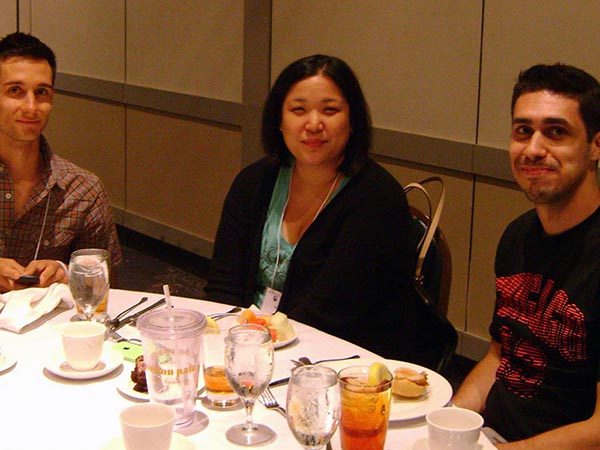
Organized by the graduate students in the dual degree program in demography, this annual workshop provides an opportunity for students and faculty to expand their methodological knowledge and interact with both local and national experts.
Organized by the graduate students in the Dual-degree in Demography program
The Population Research Institute (PRI) Graduate Student Methodology Workshops were initiated in 1994 by Dennis Hogan, PRI Director, and Gordon De Jong, Director of the Demography Program, to enhance the breadth and depth of training in demographic methods for PRI's Dual-Title Graduate Degree students. The goals of the workshop series are to empower students to identify important methodological issues, to expand their analytical skills related to those issues, and to take responsibility for inviting noted lecturers with whom they ordinarily would not interact. In addition, the workshop gives students experience in developing and managing a scientific conference.
Previous workshop topics have included:
- Population Projections, 26th Annual Workshop, May 14, 2019
- Hard to Reach Populations, 25th Annual Workshop, May 16, 2018
- Mixed Methods, 24th Annual Workshop, May 16, 2017
- Agent-Based Modeling, 23rd Annual Workshop, May 17, 2016
- Biodemography of Exceptional Longevity, 22nd Annual Workshop, June 15, 2015
Working Groups

Working groups consist of faculty and students who share a common substantive interest. Working groups convene regularly to assess the state and trajectory of new science within a specialty area of demographic research, provide a venue for critical peer reaction to ongoing or planned work, and to create an academic setting that sparks creative ideas and catalyzes the development of collaborative and multidisciplinary research projects.
If you are interested in joining a working group, contact the organizer. If you would like to organize a new working group, please contact Sarah Damaske. We will work with you to develop your idea and identify faculty who may be interested.
Population Health
The group’s interests are broadly in population health, approached from a variety of disciplinary and interdisciplinary perspectives.
Contact: Xue Zhang, xuezhang@psu.edu
Family and Gender
The Family & Gender Working Group has research interests across all aspects of family demography and gender disparities, including union formation and transitions, family inequalities (gender, race, class, etc.), and family health and wellbeing.
Contact: Johabed Olvera, jgo5096@psu.edu
Migration
The Migration Working Group is broadly focused on the process of migration and its effects on sending communities, receiving communities, and migrants and their families. The group also aims to promote interdisciplinary connections and collaborations.
Contact: Nicole Kreisberg, nqk5458@psu.edu
Climate Change and Health
The Climate Change and Health (CCH) Working Group is focused on the intersection of climate change and health, and health-related social and demographic processes (e.g., migration, fertility). This group is a part of a broader set of CCH activities that are funded by an NIH supplement to the P2C.
Contact: Asher Rosinger, axr579@psu.edu
Education and Inequality
This group is aimed at promoting research on the topic of education and inequality using population-based perspectives.
Contact: Julia Szabo, julia.szabo@psu.edu
NIH Grant Workshop Group
NIH Grant Workshop Group This group is for PRI faculty/postdoctoral associates and external affiliates who are actively writing PDB-relevant grants to submit to NIH and other relevant institutions. Both new investigators and those with considerable grant experience are encouraged to participate.
Contact: Brian Thiede, bct11@psu.edu
SSRI Working Group on Population Aging
The Collaborative on Population Aging Disparities (CoPAD) is an SSRI-funded working group that focuses on new and growing sources of inequality among aging adults, with attention to the ways that population dynamics and life course processes interact to alter the composition of the older adult population and the landscape of population health. Population aging is increasingly diverse, and new cohorts of middle-aged adults are entering their older years with different life course exposures to social stressors and policy environments with strong implications for later life health. For instance, current cohorts of aging adults in the United States contain a rapidly increasing share of immigrants, people with a history of criminal justice system contact, and those who experienced a lifetime of precarious work conditions, among other changes, all of which position them to enter their later years with lower levels of access to private and public services like retirement income and health insurance that are key social determinants of health. Globally, ever larger cohorts exposed during their lives to increased climate pressures, wars, and natural disasters are entering older adulthood, often without the family safety nets that prior generations relied on for companionship, caregiving, and social support. CoPAD brings together researchers working on these topics in several population-based, social science fields, surfaces new methodologies and data sources of interest to scholars of aging and the lifecourse, and provides a structure that helps foster new research ideas and project directions related to population aging and disparities.
Contact: Ashton Verdery, amv5430@psu.edu
External Fellows Program

PRI 2025-2027 External Fellows Program
The Pennsylvania State University’s Population Research Institute (PRI) announces the call for the second cohort of its External Fellows grant writing program. External Fellows will receive support from PRI to prepare a grant for submission to the National Institute of Health’s Eunice Kennedy Shriver National Institute of Child Health and Human Development. The External Fellows will come to Penn State’s campus for four days of intensive grant-writing training, networking, and mentorship at the start of the first year of the program, May 13-16, 2025. External Fellows will become external affiliates of PRI for two years (with possibility of continuing affiliation), will join the PRI grant writing group, and will be welcome to participate in all of PRI’s activities, including our Brown Bag series, our grant writing program events, and our working groups, such as the Migration group, the Population Health group, the Gender and Family Demography group, or the Climate Change and Health group. The External Fellows program is a two-year program open to Early Stage Investigator (ESI) population scientists.
Click here for more information about the application
Application Details
- CV
- A one-page Specific Aims page of your proposed research idea (please use 11-pt Arial font, half-inch margins), including:
- Short description of the contribution of the research.
- Brief description of possible data and methodology.
- Statement of the project’s 2-3 specific aims.
- In lieu of an impact statement, please provide 1-2 sentences to discuss fit with NICHD’s Population Dynamics Branch’s priorities and programs.
Eligibility Criteria
Applicants should be junior faculty/research scientists who qualify as Early Stage Investigators using NIH’s definition and population scientists at a research institute or university in the United States that does not have a NICHD-PDB funded population center. Visiting Scholars will be selected who have research areas aligned with PRI’s primary research areas of Population Health; Immigration, Migration, and Immigrant Integration; Families, Networks, and Social Change; and Climate Change and Health. Applicants must have a grant idea to develop that aligns with NICHD’s Population Dynamics Branch research priorities and programs.
Award Details
External Fellows will receive funding to support travel costs, meals, and hotels to travel to University Park/State College, Pennsylvania for the period of May 13-16th, 2025, where they will participate in an intensive grant-writing workshop. Activities will include developing a fundable research question, revising and workshopping specific aims, peer reviews, networking and mentoring, and all the 101 basics of applying to NICHD. After the four-day introduction to grant-writing workshop, External Fellows will continue their relationship with PRI as External Fellows/external affiliates (with all the benefits of external affiliation) for two more years. During this time, External Fellows will participate in the PRI grant-writing group as they work to develop and submit externally funded grants to NICHD’s Population Dynamics branch, will receive support from PRI’s faculty associates, and join in PRI topical area writing groups.
Application deadline: March 5th, 2025
Email applications to: Nicole Sharkey, Project Manager, nds156@psu.edu
Decision notification: March 31st, 2025
Program Runs: May 2025-May 2027